UTI & Cystitis Treatment
Fast, professional treatment for urinary tract infections. Get expert assessment and antibiotic prescriptions at your local pharmacy.
What is a UTI?
A urinary tract infection (UTI) is an infection anywhere in the urinary system (kidneys, ureters, bladder, or urethra). Cystitis specifically means bladder inflammation/infection. UTIs are caused by bacteria (usually E. coli from the bowel) entering the urinary system.
UTIs are very common, especially in women and people with female urinary systems. They often get better without treatment, but antibiotics speed up recovery and stop bacteria from spreading to the kidneys.
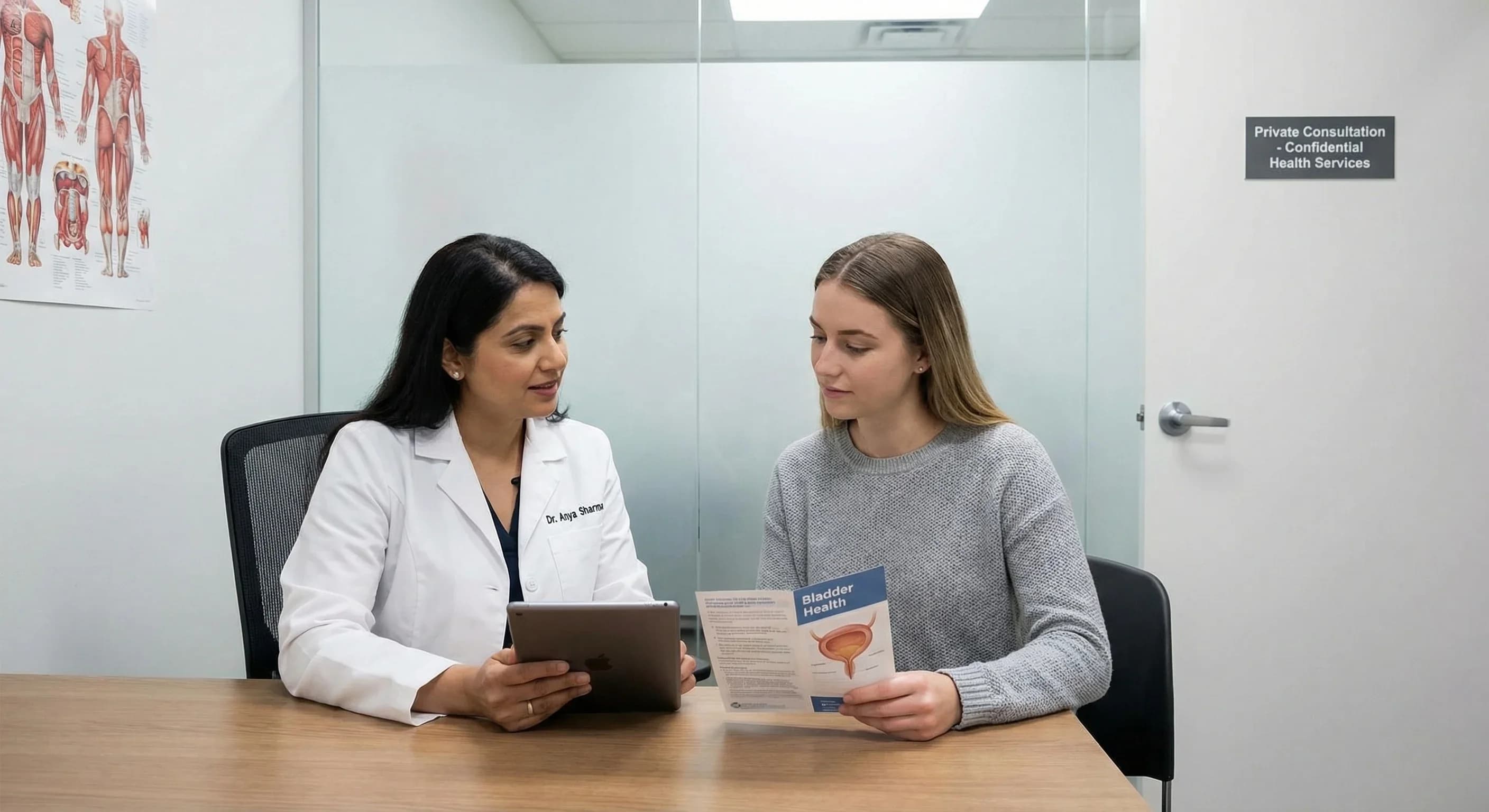
Through the HSE Common Conditions Service, pharmacists can test your urine, assess your symptoms, and prescribe antibiotics for uncomplicated UTI - without needing a GP appointment.
Signs & Symptoms
Typical UTI symptoms:
- • Burning or pain when passing urine (most common)
- • Needing to pass urine more often than usual
- • Urgent need to pass urine
- • Pain in lower abdomen or bladder area
- • Cloudy, dark, or smelly urine
- • Blood in urine (may indicate more serious infection)
⚠️ Signs of Kidney Infection (See GP Urgently):
- • High temperature/fever
- • Back or side pain
- • Nausea or vomiting
- • Feeling generally unwell
When to See a Pharmacist
You're a woman aged 16-64 with typical UTI symptoms
You've had UTIs before and recognise the symptoms
You want fast access to antibiotics without GP appointment
You need advice on preventing future UTIs
See a GP instead if:
- • You are male with UTI symptoms
- • You are pregnant
- • You have fever, back pain, or vomiting (kidney infection)
- • You are age 65+ or under 16
- • Blood in urine
- • Frequently recurring UTIs (2+ in 6 months)
- • Symptoms after taking antibiotics
- • You have diabetes, weakened immune system, or urinary catheter
Treatment Available
Antibiotics are the main treatment for UTI. They work by killing the bacteria causing the infection and usually relieve symptoms within 24 hours.
What the pharmacist will do:
- •Assess your symptoms and medical history
- •Test your urine with a dipstick to confirm infection
- •Prescribe appropriate antibiotics (3-7 day course)
- •Advise on self-care (fluids, frequent urination)
- •Refer to GP if complications are identified
Self-Care at Home
- Drink plenty of water to flush bacteria from the system
- Empty your bladder frequently - don't hold urine
- Pain relief (paracetamol or ibuprofen) can ease discomfort
- Continue your full antibiotic course even if symptoms improve
Prevention Tips
- Drink plenty of water throughout the day
- Urinate after sexual activity (flushes bacteria)
- Wipe front to back after using toilet (women)
- Avoid perfumed soaps and bubble baths near genitals
- Wear cotton underwear
- Avoid holding urine - empty bladder regularly
How to Book a Consultation
Option 1: Book Online
Search for pharmacies in your area and book your consultation time online.
Find a PharmacyOption 2: Walk In or Call
Visit your local participating pharmacy directly or call ahead to book an appointment.
Consultation fee: Set by each pharmacy and shown when you book. Antibiotics cost is additional.
Frequently Asked Questions
What causes UTIs?
UTIs are caused by bacteria (usually E. coli from the bowel) entering the urethra and ascending to the bladder. Common entry routes: SEXUAL ACTIVITY (most common cause); WIPING TOILET PAPER BACK TO FRONT; inserting tampons; urinary catheters; pregnancy. Why women are affected more: shorter urethra makes bacteria entry easier. In men: enlarged prostate may retain urine, allowing bacteria to multiply. Diabetes, weakened immunity, and unable to empty bladder fully all increase risk.
What are symptoms of a UTI?
Classic symptoms: BURNING or PAIN when passing urine (dysuria - most common symptom); FREQUENT URINATION (more often than usual, especially at night); URGENT NEED to pass urine; PAIN in lower abdomen or bladder area; CLOUDY, DARK, or SMELLY urine; BLOOD in urine. You may feel feverish or unwell. Some people have no symptoms but bacteria in urine (asymptomatic bacteriuria - especially important in pregnancy). If fever, back pain, nausea/vomiting: may indicate kidney infection (pyelonephritis) - see GP urgently.
Can a pharmacist treat UTI?
Yes. Under HSE Common Conditions Service, pharmacists can assess uncomplicated UTI and prescribe antibiotics. Eligible: non-pregnant women aged 16-64 with typical uncomplicated UTI symptoms; women who've had UTIs before. Consultation includes urine testing (dipstick), medical history review, antibiotic prescription. Pharmacist will refer to GP if: men with UTI symptoms; pregnant women; children; age 65+; recurrent UTIs; blood in urine; kidney infection symptoms (fever, back pain); symptoms after antibiotics. The consultation fee is set by each pharmacy and shown when you book.
How long does UTI take to clear?
With antibiotics: symptoms typically improve within 24 hours. Complete resolution usually within 3-7 days. Course duration: 3-7 days depending on antibiotic chosen. Most infections respond well - 80-90% cure rate. Continue full antibiotic course even if symptoms improve to prevent resistance. Without treatment: UTI usually clears in 1-2 weeks but symptoms persist longer. Drink plenty of water to help flush out bacteria.
Is UTI contagious?
No - UTI is NOT contagious. It's caused by bacteria from your own bowel entering the urinary system, not transmitted from other people. Sexual activity may TRIGGER a UTI (bacteria introduced) but your partner hasn't 'given' it to you. Can continue sexual relations during treatment but some find it uncomfortable until symptoms resolve. Partners do not need treatment unless they develop symptoms.
Can I get UTI during pregnancy?
UTI is more common in pregnancy due to hormonal and anatomical changes. About 2-10% of pregnant women have asymptomatic bacteriuria (bacteria in urine without symptoms). IMPORTANT: All UTIs in pregnancy require GP assessment and treatment - asymptomatic bacteriuria MUST be treated to prevent kidney infection. Antibiotics safe in pregnancy: amoxicillin, cefalexin, nitrofurantoin (late pregnancy), trimethoprim (2nd/3rd trimester only). Avoid: tetracyclines, fluroquinolones. See GP, not pharmacist, for pregnancy-related UTI.
What if I keep getting UTIs?
RECURRENT UTI is defined as: 2+ infections in 6 months (women), or 3+ in 12 months (women/men). Risk factors: diabetes, incomplete bladder emptying, sexual activity, enlarged prostate (men). Management: identify and treat underlying causes; prophylactic antibiotics (daily low-dose for up to 6 months); consider imaging to rule out abnormalities; cystoscopy if indicated. Prevention: adequate hydration, empty bladder frequently, post-coital urination in women, avoid irritants. See GP for investigation of recurrent UTI - not treatable at pharmacy.
When should I see a doctor instead of a pharmacist?
See GP (not pharmacist) if: YOU ARE MALE (UTI in men is complicated); YOU ARE PREGNANT (all UTI requires GP); FEVER, BACK PAIN, NAUSEA/VOMITING (suggests kidney infection); BLOOD IN URINE; symptoms AFTER antibiotics; AGE OVER 65 or under 16; FREQUENT RECURRENT INFECTIONS; WEAKENED IMMUNE SYSTEM or DIABETES; urinary catheter user; inability to empty bladder. Pharmacist will refer to GP if complications identified during consultation. Kidney infection (pyelonephritis) needs stronger antibiotics and close monitoring.
How can I prevent UTIs?
Prevention strategies: DRINK PLENTY OF WATER (dilutes urine, flushes bacteria); EMPTY BLADDER FREQUENTLY (don't hold urine); WIPE FRONT TO BACK after toilet (women); URINATE AFTER SEXUAL ACTIVITY (flushes bacteria); AVOID IRRITANTS (perfumed soaps, bubble bath, tight pants); MAINTAIN GOOD HYGIENE; TREAT CONSTIPATION (promotes UTI); wear cotton underwear. Cranberry juice: some evidence it helps - won't cure infection but may help prevention. If recurrent despite measures, see GP about prophylactic antibiotics.
How much does UTI treatment cost at a pharmacy?
Consultation fee: set by each pharmacy and shown when you book. Antibiotics (3-7 day course): approximately €6-15 depending on antibiotic choice, plus the consultation fee set by the pharmacy. Medical card holders: the consultation fee still applies, but prescribed medication may be covered under the GMS scheme. Drugs Payment Scheme (DPS): pay maximum €80 per month for approved medications. Untreated UTI can lead to complications (kidney infection) requiring hospital treatment - early pharmacy consultation is cost-effective.
Find Participating Pharmacies
All pharmacies offering the Common Conditions Service provide treatment for all eight conditions, including UTI and cystitis.
Search Pharmacies Near YouMedical content source: HSE.ie (Health Service Executive, Ireland)
Information accurate as of February 2026. For official HSE guidance, visit hse.ie/conditions/cystitis